 K-12 School LED Lighting Upgrades in Georgia | DTL">
Why Lighting in Schools Impacts More Than Just Energy Costs
For many K–12 schools, lighting is viewed primarily as a utility expense. However, research shows that lighting plays a critical role in student performance, teacher effectiveness, safety, and overall facility operations.
While LED upgrades can significantly reduce energy consumption, schools often overlook the broader impact that improved lighting can have on learning environments and operational efficiency.
Improved Student Performance and Concentration
Lighting has a direct impact on how students focus, process information, and perform academically.
Research from the Heschong Mahone Group found that students in classrooms with improved lighting conditions progressed:
- 20% faster in math
- 26% faster in reading
compared to students in poorly lit environments.
Additional studies have shown that better lighting can:
- improve concentration levels
- reduce eye strain
- support longer periods of focused learning
For school administrators, even small improvements in student performance can have a meaningful impact across an entire district.
Enhanced Teacher Productivity and Reduced Fatigue
Teachers spend long hours in classroom environments where lighting quality directly affects comfort and effectiveness.
LED lighting improves:
- visual clarity
- color rendering
- consistency of illumination
These improvements help reduce:
- eye strain
- headaches
- fatigue over the course of the day
Better lighting environments support teachers in maintaining energy levels, improving classroom engagement, and delivering more effective instruction.
Improved Safety for Students, Staff, and Visitors
School safety is a top priority for districts and administrators.
Lighting plays a critical role in maintaining safe environments across:
- hallways
- gymnasiums
- cafeterias
- parking lots and exterior areas
According to the National Safety Council, slips, trips, and falls account for over 25% of workplace injuries, and inadequate lighting is a known contributing factor.
Upgraded LED lighting improves:
- visibility in high-traffic areas
- security in outdoor spaces
- situational awareness for staff and students
This contributes to safer campuses and reduced risk exposure.
Reduced Maintenance and Operational Disruptions
Maintenance is a major challenge for school districts, especially those managing multiple buildings.
Traditional lighting systems require:
- frequent bulb replacements
- lift equipment for high ceilings
- ongoing labor costs
LED systems significantly reduce these burdens.
According to the U.S. Department of Energy, LED lighting can last 25,000 to 50,000 hours or more, which is several times longer than fluorescent or HID systems.
This results in:
- fewer maintenance calls
- lower labor costs
- reduced classroom disruption
For districts with limited maintenance staff, this is often one of the most immediate operational benefits.
Better Learning Environments and School Perception
Lighting quality also impacts how students, parents, and staff perceive a school’s environment.
Modern LED lighting creates:
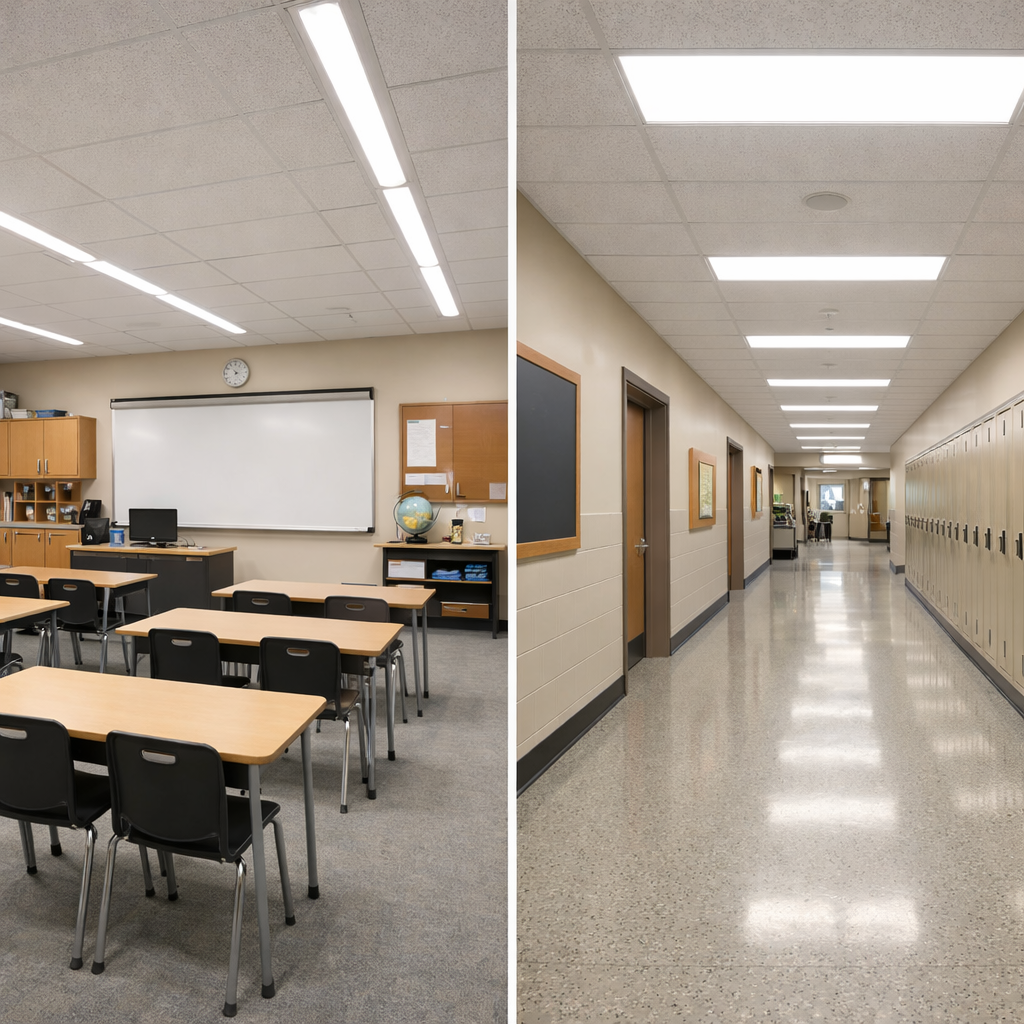
- brighter, more inviting classrooms
- consistent lighting across spaces
- improved overall facility appearance
Poor lighting, on the other hand, can make schools feel:
- outdated
- poorly maintained
- less conducive to learning
Upgrading lighting is one of the most cost-effective ways to modernize facilities without major renovations.
Energy Savings and Available Utility Rebates
In addition to these operational and educational benefits, LED lighting delivers substantial energy savings.
Most schools experience:
- 40–70% reduction in lighting energy consumption
Utility programs from:
- Dominion Energy
- Georgia Power
may cover a significant portion of project costs, in some cases up to 70% depending on eligibility.
This often results in:
- payback periods of 12–24 months or less
For budget-conscious districts, this makes lighting upgrades both financially and operationally attractive.
Applications Across Educational Facilities
While these benefits are most commonly associated with K–12 schools, they also apply to:
- higher education campuses
- technical schools
- administrative buildings
- athletic facilities
Any educational environment can benefit from improved lighting performance, safety, and efficiency.
How DTL Energy Solutions Supports School Lighting Upgrades
DTL Energy Solutions works with school districts and educational facilities across Georgia and South Carolina to deliver turnkey LED lighting upgrades.
Services include:
- facility walkthroughs
- rebate qualification and application
- product selection and procurement
- professional installation
- ongoing support
This approach allows schools to upgrade infrastructure without managing multiple vendors or navigating complex rebate programs.
Request a School Lighting Assessment
If your school or district is evaluating ways to improve facility performance and reduce operating costs, DTL Energy Solutions can provide a complimentary assessment.
Request a facility review below