Why Lighting Matters in Healthcare Facilities
In healthcare environments, lighting impacts far more than energy consumption.
It directly affects:
- patient comfort and recovery
- staff visibility and performance
- workplace safety
- facility cleanliness perception
- operational efficiency
- maintenance demands
While many healthcare organizations initially evaluate LED lighting upgrades based on utility savings, the broader operational and patient-related benefits are often even more significant.
For hospitals, medical offices, surgical centers, and outpatient facilities operating long hours, lighting quality plays a critical role in daily performance.
Improved Patient Experience and Comfort
Lighting strongly influences how patients perceive healthcare environments.
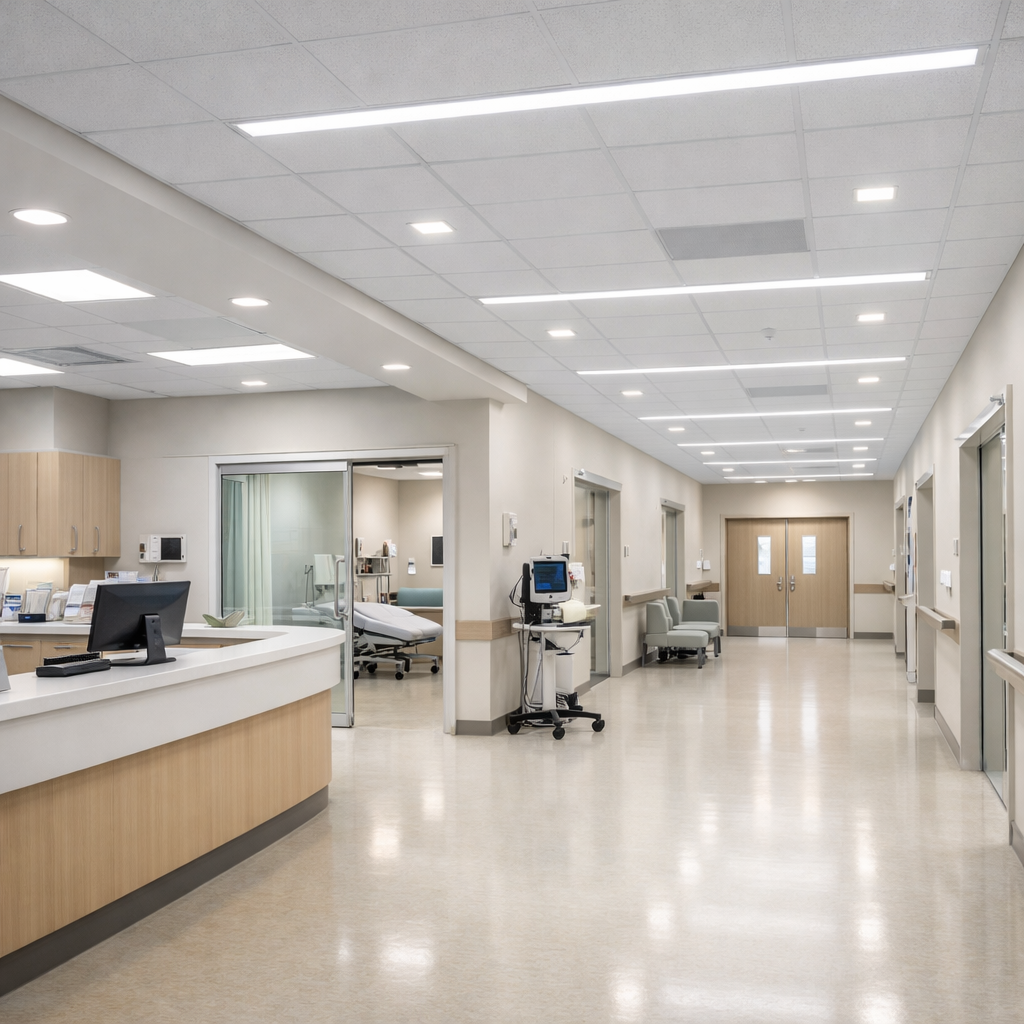
Bright, consistent LED lighting helps create:
- cleaner and more modern spaces
- improved visibility throughout patient areas
- a calmer and more comfortable environment
Research published by the Center for Health Design has shown that healthcare environments with improved lighting can positively influence patient satisfaction and overall perception of care.
Poor lighting, on the other hand, can make facilities feel:
- outdated
- less welcoming
- more stressful for patients and visitors
For healthcare providers focused on patient experience scores and facility perception, lighting upgrades can support broader improvement initiatives.
Better Visibility for Clinical and Administrative Staff
Healthcare professionals work in fast-paced environments where visibility and accuracy are essential.
LED lighting improves:
- color rendering and visibility
- clarity in patient care areas
- consistency of illumination across workspaces
Improved lighting can help reduce:
- eye strain
- fatigue during long shifts
- visibility-related operational challenges
According to workplace lighting research from the American Society of Interior Designers, improved lighting conditions have been associated with productivity increases of up to 18% in certain work environments.
For healthcare teams working extended hours, lighting quality directly impacts comfort and operational performance.
Improved Safety Across Healthcare Environments
Safety is a constant priority in healthcare facilities.
Lighting plays a critical role in maintaining safe environments across:
- hallways
- patient rooms
- parking areas
- nursing stations
- exterior walkways
According to the National Safety Council, slips, trips, and falls account for over 25% of workplace injury claims, and inadequate lighting is a known contributing factor.
Improved LED lighting helps healthcare facilities:
- increase visibility in high-traffic areas
- improve wayfinding for visitors
- enhance exterior security
- reduce dark spots and inconsistent illumination
This contributes to a safer environment for both patients and staff.
Reduced Maintenance and Facility Disruption
Healthcare facilities often operate 24/7, making maintenance interruptions difficult and costly.
Traditional lighting systems require:
- frequent bulb replacements
- maintenance labor
- lift equipment in larger spaces
LED systems dramatically reduce these demands.
According to the U.S. Department of Energy, LED lighting systems commonly last 25,000 to 50,000 hours or more, significantly reducing maintenance frequency compared to fluorescent or HID fixtures.
This results in:
- fewer disruptions in patient care areas
- lower maintenance costs
- reduced after-hours service requirements
- more consistent lighting performance
For hospitals and multi-building healthcare campuses, these operational savings can become substantial over time.
Improved Facility Appearance and Modernization
Lighting upgrades are also one of the fastest ways to modernize healthcare facilities without major renovations.
Modern LED systems create:
- brighter waiting areas
- cleaner-looking interiors
- improved consistency across spaces
- enhanced visibility for patients and staff
For medical offices and outpatient facilities, improved lighting can contribute to stronger first impressions and a more professional patient experience.
Energy Savings and Available Utility Rebates
In addition to operational improvements, LED upgrades provide significant reductions in energy usage.
Most healthcare facilities experience:
- 40–70% reduction in lighting energy consumption
Utility programs from:
- Dominion Energy
- Georgia Power
may cover a significant portion of project costs, in some cases up to 70% depending on eligibility.
This often results in:
- reduced utility expenses
- accelerated ROI
- payback periods of 12–24 months or less
Facilities operating around the clock often experience especially strong financial returns due to high lighting usage.
Applications Across Healthcare Environments
These benefits apply across a wide range of healthcare environments, including:
- hospitals
- medical office buildings
- outpatient clinics
- surgical centers
- rehabilitation facilities
- assisted living and senior care facilities
Any healthcare operation relying on visibility, safety, and patient experience can benefit from improved lighting performance.
How DTL Energy Solutions Supports Healthcare Lighting Upgrades
DTL Energy Solutions works with healthcare providers across Georgia and South Carolina to deliver turnkey LED lighting upgrades.
Services include:
- facility walkthroughs
- rebate qualification and application
- product selection and procurement
- professional installation
- ongoing support
This approach allows healthcare organizations to modernize infrastructure while minimizing disruption to patients and staff.
Request a Healthcare Facility Lighting Assessment
If your healthcare facility is evaluating ways to improve patient experience, safety, and operational efficiency, DTL Energy Solutions can provide a complimentary assessment.
Request a facility review below!